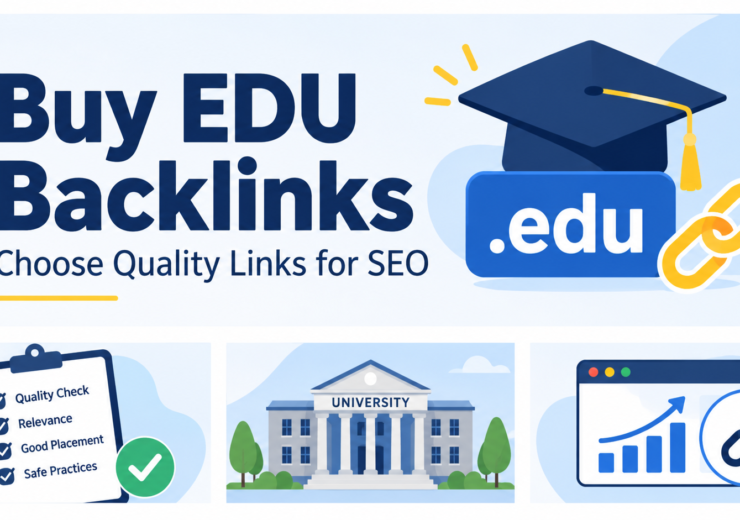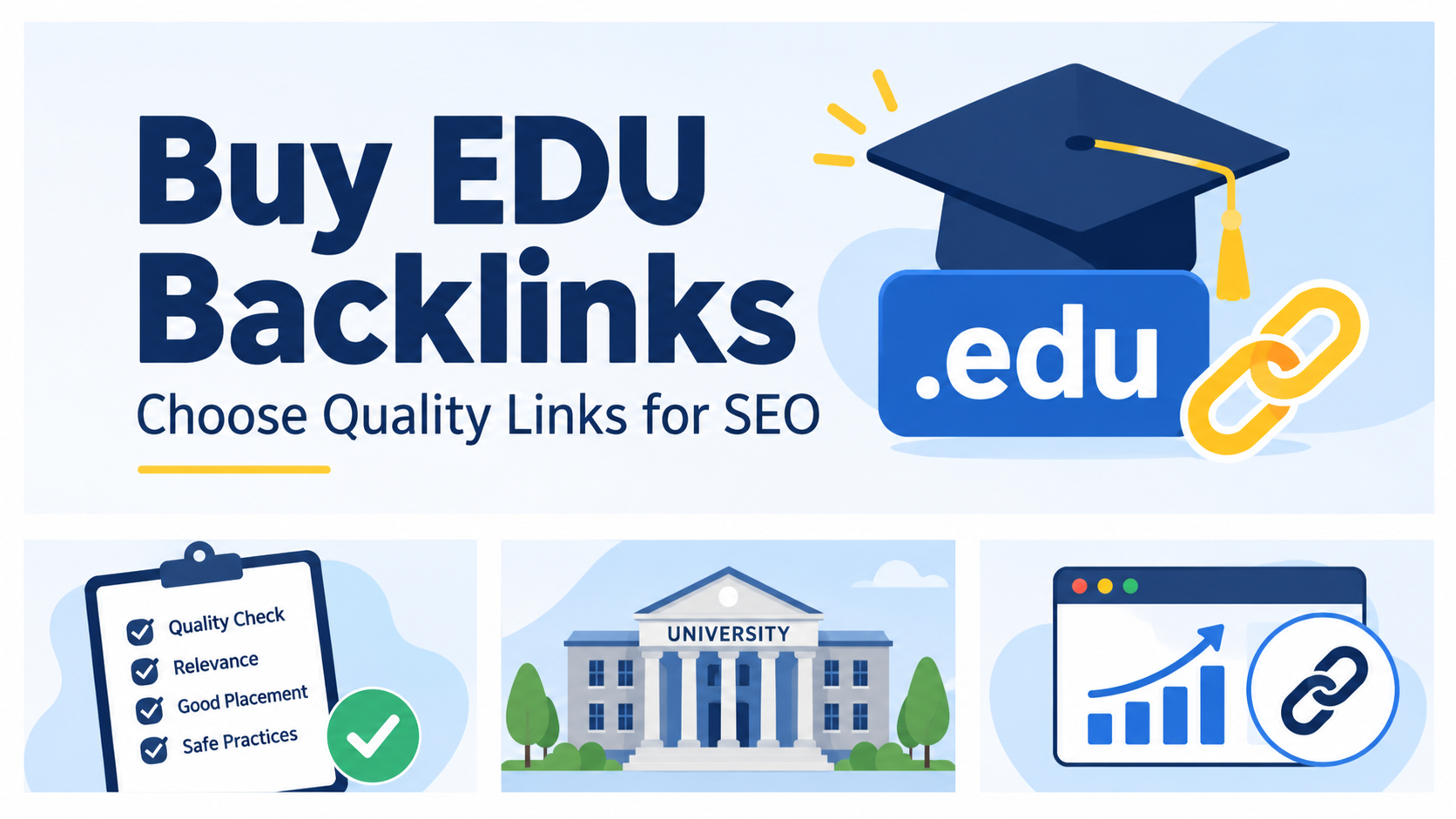
Buy EDU Backlinks: How to Choose Quality Links for SEO

Building a strong backlink profile is an important part of an effective SEO strategy. Quality backlinks can help search engines discover your website, understand its relevance, and evaluate its authority. Among the different types of backlinks available, links from educational websites often attract attention from website owners, SEO professionals, and digital marketing agencies.
If you are planning to buy EDU backlinks, it is important to understand what you are purchasing, how to evaluate link quality, and which factors matter when selecting a backlink provider. Not every website ending in .edu provides the same value, and choosing links based only on domain extensions can lead to disappointing results.
In this guide, we will explain how EDU backlinks work, what types of educational links are available, how to evaluate providers, and what to consider before purchasing an EDU backlink service.
What Are EDU Backlinks?
EDU backlinks are hyperlinks that originate from websites using educational domain extensions, particularly .edu. These websites are commonly associated with universities, colleges, academic institutions, and educational organizations.
For example, an educational website might publish a research resource, student guide, academic article, or useful reference that links to an external website. When that link points to your website, it becomes an EDU backlink.
SEO professionals often consider educational websites when developing link-building strategies because they may publish valuable, informative, and relevant content.
However, it is important to understand that Google does not automatically give a website higher rankings simply because it receives a backlink from a .edu domain. The relevance, editorial quality, context, and overall credibility of a link matter more than the domain extension alone.

Why Do Website Owners Look to Buy EDU Backlinks?
Many website owners search for EDU backlink services because they want to expand their backlink profiles and discover additional link-building opportunities.
Here are some common reasons businesses explore educational backlinks.
1. Build a More Diverse Backlink Profile
A natural backlink profile can include links from blogs, business websites, news publications, educational resources, industry directories, and other relevant websites.
EDU backlinks can form part of this broader mix when they are earned through legitimate and relevant placements.
Instead of focusing on one type of backlink, businesses should develop a balanced strategy that prioritizes useful content and genuine editorial references.
2. Gain Relevant Referral Traffic
Educational websites sometimes attract students, researchers, teachers, and professionals looking for information.
A relevant link placed within useful educational content may introduce your website to an audience interested in your products, services, or resources.
Referral traffic is particularly valuable when visitors have a genuine reason to explore your website.
3. Improve Website Discovery
Links help search engines discover pages across the web. A relevant link from an established educational resource can provide another discovery path to your website.
However, a backlink does not guarantee indexing, increased rankings, or additional organic traffic.
4. Support Content Marketing Activities
Businesses that publish useful research, guides, educational resources, and industry information can look for opportunities to contribute to relevant academic and educational discussions.
For example, a digital marketing company might publish a guide explaining search engine optimization for small businesses. If an educational institution finds that resource useful, it may reference it in an appropriate resource list.
The focus should always be on providing information worth referencing.
Different Types of EDU Backlinks You Should Know
Before you buy EDU backlinks, understand the different placement types available. Each has its own characteristics and should be evaluated individually.
1. EDU Guest Post Backlinks
EDU guest posts involve contributing original content to an educational website when the publisher accepts relevant external contributions.
For example, an SEO professional might write an educational article about website optimization, digital marketing, or online business development.
A guest post can include an external reference when it genuinely supports the content and complies with the publisher’s editorial guidelines.
What to check:
- Whether the website genuinely publishes educational content.
- Whether the article is original and useful.
- Whether the topic is relevant to your website.
- Whether the publisher clearly discloses paid placements.
- Whether the link is appropriately qualified.
2. EDU Blog Comment Backlinks
Some educational websites allow readers to comment on articles and participate in discussions.
A blog comment may contain a website URL, depending on the website’s settings.
However, comment links are generally not a strong substitute for editorial references. Many comment sections use nofollow or other link attributes, and automated or irrelevant commenting can look like spam.
If you consider this type of service, prioritize genuine discussion and avoid mass-generated comments.
3. EDU Resource Page Backlinks
Educational institutions sometimes maintain resource pages containing useful external references.
These pages may recommend research materials, educational tools, learning resources, industry guides, and relevant publications.
If your website provides genuinely useful educational material, you may be able to request consideration for inclusion.
Resource links should be based on usefulness and relevance rather than payment for ranking manipulation.
4. EDU Editorial Backlinks
Editorial backlinks appear naturally within an article, research publication, or educational resource because the publisher considers an external reference useful.
These links can be valuable because they provide readers with additional information.
The best approach is to create original resources, research, and informative content that publishers have a genuine reason to reference.
How to Choose the Best EDU Backlink Service
Choosing the right provider is one of the most important steps when considering an EDU backlink package.
Several services advertise hundreds of educational backlinks, but link quantity alone does not establish quality.
Use the following checklist before purchasing.
1. Check Domain Relevance
Look at the actual website, not just its domain extension.
Ask these questions:
- Does the website publish genuine educational content?
- Is the website related to your industry or topic?
- Does it have useful pages for visitors?
- Does it publish original articles and resources?
- Does the proposed placement make sense for your website?
A relevant placement on a genuine website is generally more meaningful than an unrelated link selected only because it has a .edu extension.
2. Evaluate Website Quality
Do not depend entirely on third-party metrics such as Domain Authority (DA), Domain Rating (DR), or Trust Flow.
These metrics can help with initial comparisons, but they are not official Google ranking factors.
Also examine:
- Website content quality.
- Organic search visibility.
- Realistic publishing activity.
- Website history.
- Outbound link patterns.
- Topical relevance.
- Signs of spam or manipulated content.
3. Understand Link Placement
Ask the provider where your backlink will appear.
Will it be placed within an article, a relevant resource page, or a comment section?
Contextual links within useful content may provide a better experience for readers than links placed in unrelated sections.
Always request placement details before purchasing.
4. Ask About Link Attributes
Backlinks can use different link attributes.
Some important examples include:
rel="follow": A common way to describe an ordinary link without a special qualification.rel="nofollow": Indicates that the publisher does not want the link treated as a normal endorsement.rel="sponsored": Identifies links created as part of advertising, sponsorship, or compensation arrangements.
Paid links intended to manipulate search rankings can violate Google’s link spam policies. Paid placements should be appropriately qualified, typically using rel="sponsored" or rel="nofollow".
Do not assume that a paid backlink will be treated as an editorial endorsement.
5. Check Delivery and Reporting
A professional provider should explain what you will receive after purchasing.
Ask whether the service includes:
- Published backlink URLs.
- Source website information.
- Target URLs.
- Anchor text details.
- Link attribute information.
- Publication status.
- Delivery timeline.
- Replacement or refund conditions.
A clear delivery report helps you verify the work and maintain your backlink records.
How Much Do EDU Backlinks Cost?
The price of EDU backlinks varies depending on the website, publishing requirements, placement type, content development, and outreach effort.
There is no universal market price for an EDU backlink.
For example, a contextual guest post on a genuine educational website may require more editorial work than a basic comment placement.
Some providers offer individual placements, while others sell packages containing multiple links.
Before comparing prices, examine what each package actually includes.
| Pricing factor | What to evaluate |
|---|---|
| Website quality | Genuine educational website and content |
| Placement type | Guest post, resource page, or comment |
| Content creation | Original article or existing content |
| Relevance | Connection to your industry |
| Link attributes | Sponsored, nofollow, or other attributes |
| Reporting | Published URLs and delivery information |
| Outreach | Genuine publisher communication |
Our recommendation: Do not select a provider simply because it offers the highest number of backlinks at the lowest price. Evaluate the actual websites and placement opportunities before making a decision.
EDU Guest Posts vs. EDU Blog Comments: Which Should You Choose?
Both options are available in the backlink marketplace, but they serve different purposes.
| Comparison | EDU Guest Posts | EDU Blog Comments |
|---|---|---|
| Content | Original contributed article | Relevant discussion |
| Placement | Within published content | Comment section |
| Editorial requirements | Usually higher | Depends on moderation |
| Content relevance | Can be highly targeted | Depends on the discussion |
| Main consideration | Editorial value | Genuine participation |
For businesses looking for educational content opportunities, relevant guest contributions may offer a better way to demonstrate expertise and provide useful information.
Blog comments should be treated as genuine audience engagement rather than a method of generating large numbers of backlinks.
Common Mistakes to Avoid When Buying EDU Backlinks
Buying or evaluating backlinks without proper research can waste money and create unnecessary SEO risks.
Avoid these common mistakes.
1. Buying links only because they have a .edu extension
A domain extension does not automatically make a backlink valuable. Evaluate the website and the actual placement.
2. Choosing packages based only on quantity
A package containing 100 unrelated links may be less useful than a carefully selected set of relevant editorial opportunities.
3. Using identical anchor text everywhere
An unnatural concentration of commercial keyword anchor text can create an artificial-looking backlink profile. Use descriptive and natural references where appropriate.
4. Ignoring website relevance
A backlink should make sense in the context of the source page and the destination website.
5. Expecting instant ranking improvements
Backlinks do not guarantee first-page rankings, immediate indexing, or a particular increase in organic traffic.
6. Ignoring Google’s link spam policies
Avoid link schemes, automated link creation, and paid placements designed to manipulate search rankings. Understand Google’s requirements for qualifying sponsored links.
How Suaki Helps You Explore EDU Backlink Opportunities
Finding relevant backlink opportunities can take time, especially when you need to evaluate educational websites, content requirements, and publishing options.
At Suaki, we provide backlink-related services designed for website owners, SEO professionals, and digital marketing agencies exploring different link-building opportunities.
Our EDU-related service offerings include:
- EDU Backlink Packages: Explore educational backlink package options for your link-building requirements.
- EDU Guest Post Service: Explore opportunities for educational content placements.
- Backlink Solutions: Discover additional link-building services for different website and SEO requirements.
Whether you manage an individual website or work with multiple SEO clients, evaluate each backlink opportunity based on its relevance, content quality, and publishing conditions.
Explore our EDU backlink services at Suaki to learn more about the available options.
You can also visit our EDU Guest Post Service to explore our guest post offering.
Frequently Asked Questions About Buying EDU Backlinks
1. Is it safe to buy EDU backlinks?
It depends on how the links are obtained and used. Paying for links intended to manipulate search rankings can violate Google’s spam policies. Paid placements should be appropriately qualified, and link-building should focus on legitimate editorial and referral value.
2. Do EDU backlinks improve Google rankings?
Not automatically. Google does not provide a special ranking advantage simply because a backlink comes from a .edu domain. Relevance, content quality, and the overall context of the link are important considerations.
3. Where can I buy EDU backlinks?
You can explore specialist backlink providers and compare their educational link-building services. Before purchasing, review their source websites, placement types, pricing, link attributes, and reporting process. You can also explore EDU-related services through Suaki.
4. Are EDU guest post backlinks better than EDU comment backlinks?
They serve different purposes. A relevant guest contribution can provide more room for useful information and contextual references. Blog comments are primarily intended for discussion and should not be used for mass backlink creation.
5. How many EDU backlinks should I build?
There is no fixed number of EDU backlinks required for better SEO performance. Focus on useful content, relevant editorial opportunities, and a balanced backlink profile rather than setting an arbitrary link quantity.
6. Are all .edu websites authoritative?
No. The domain extension alone does not establish the quality, relevance, or authority of a website. Review the actual website, its content, publishing standards, and backlink placement.
7. Can I use EDU backlinks for affiliate websites?
Affiliate website owners can pursue legitimate educational outreach opportunities when their content provides useful information for the educational audience. However, paid links intended to manipulate rankings should be properly qualified.
8. What information should I request before purchasing an EDU backlink package?
Ask for source website details, proposed placement type, target URL, anchor text, link attributes, content requirements, delivery timeline, and reporting details. This information will help you evaluate the service before making a purchase.
Final Thoughts
EDU backlinks can be an interesting part of a broader link-building strategy when the opportunities are relevant, genuine, and useful to website visitors.
However, purchasing educational backlinks should not be based solely on domain extensions, domain metrics, or the number of links included in a package. The actual website, content quality, placement, and link qualification are much more important considerations.
If you are exploring ways to expand your website’s backlink profile, take time to compare providers and understand what each service delivers.
Looking for EDU backlink opportunities? Visit Suaki.com to explore our backlink services and find options that match your website’s requirements.